CONCEPT DESIGN
OPC developed a vessel concept for transporting abnormal indivisible loads (AIL) and discharging them using self-propelled modular transporters (SPMTs). A key requirement was the ability to intentionally ground the vessel on a varying seabed profile and carry out discharge while aground. The design therefore needed to accommodate both the afloat transport condition and the changing support and loading conditions during grounding and cargo discharge.


Design Requirements
The assessment considered how the vessel’s hull structure, load capacity and stability would support the proposed operation. Particular attention was given to the structural implications of beach support and the movement of heavy cargo during roll-off.
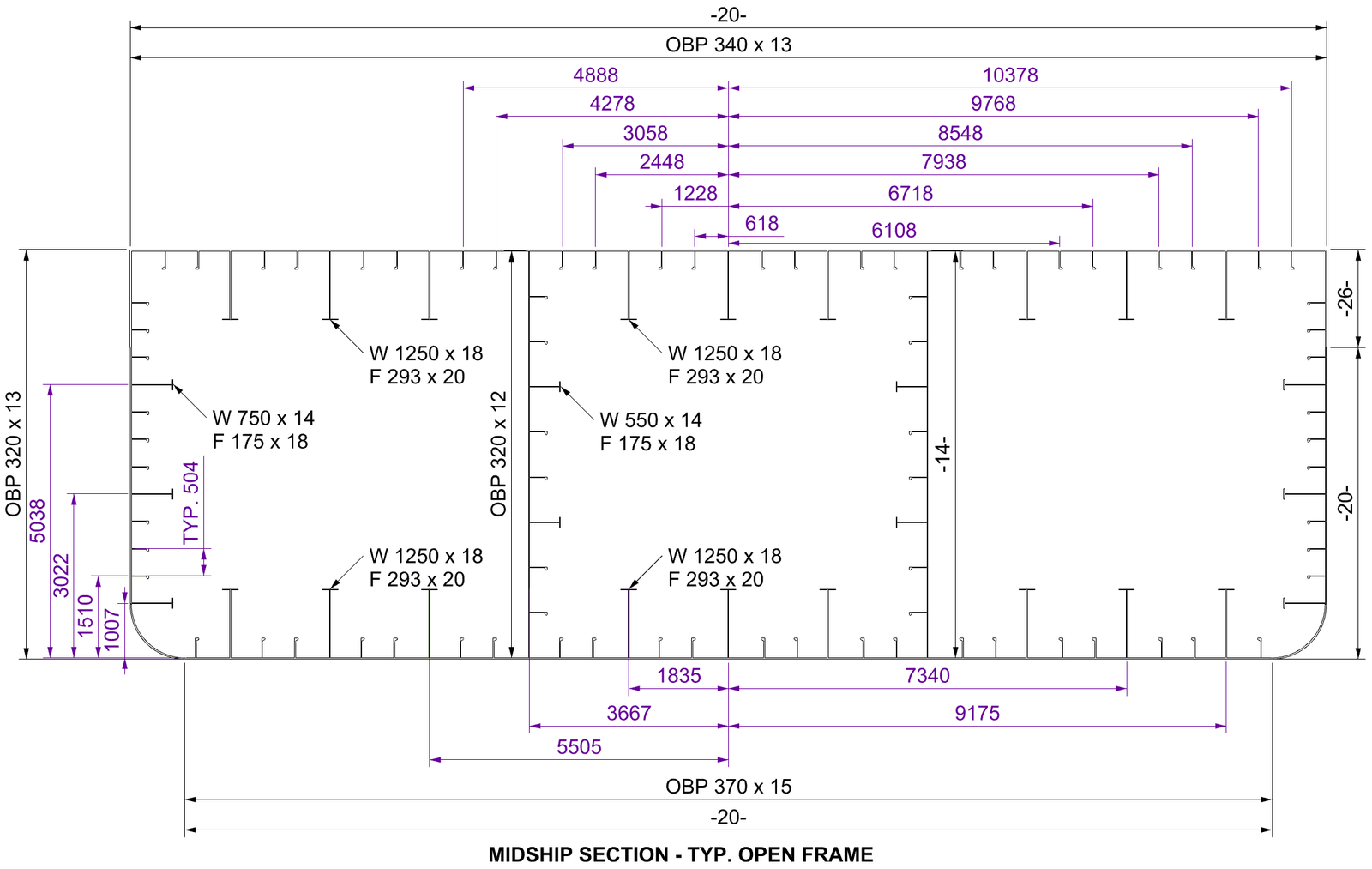
These conditions informed the development of the midship section and the assessment of global hull strength and local structural capacity.
Scope of Work
OPC’s work included:
- Development of the vessel concept and midship section.
- Scantling calculations to class society rules.
- Finite element analysis of global hull strength.
- Local structural assessment using non-linear analysis to investigate buckling behaviour and load capacity.
- Evaluation of the grounding and discharge conditions.
- Validation of load-carrying capacity and assessment of vessel stability.
- Preliminary resistance and propulsion assessments to inform concept development.
Structural Assessment
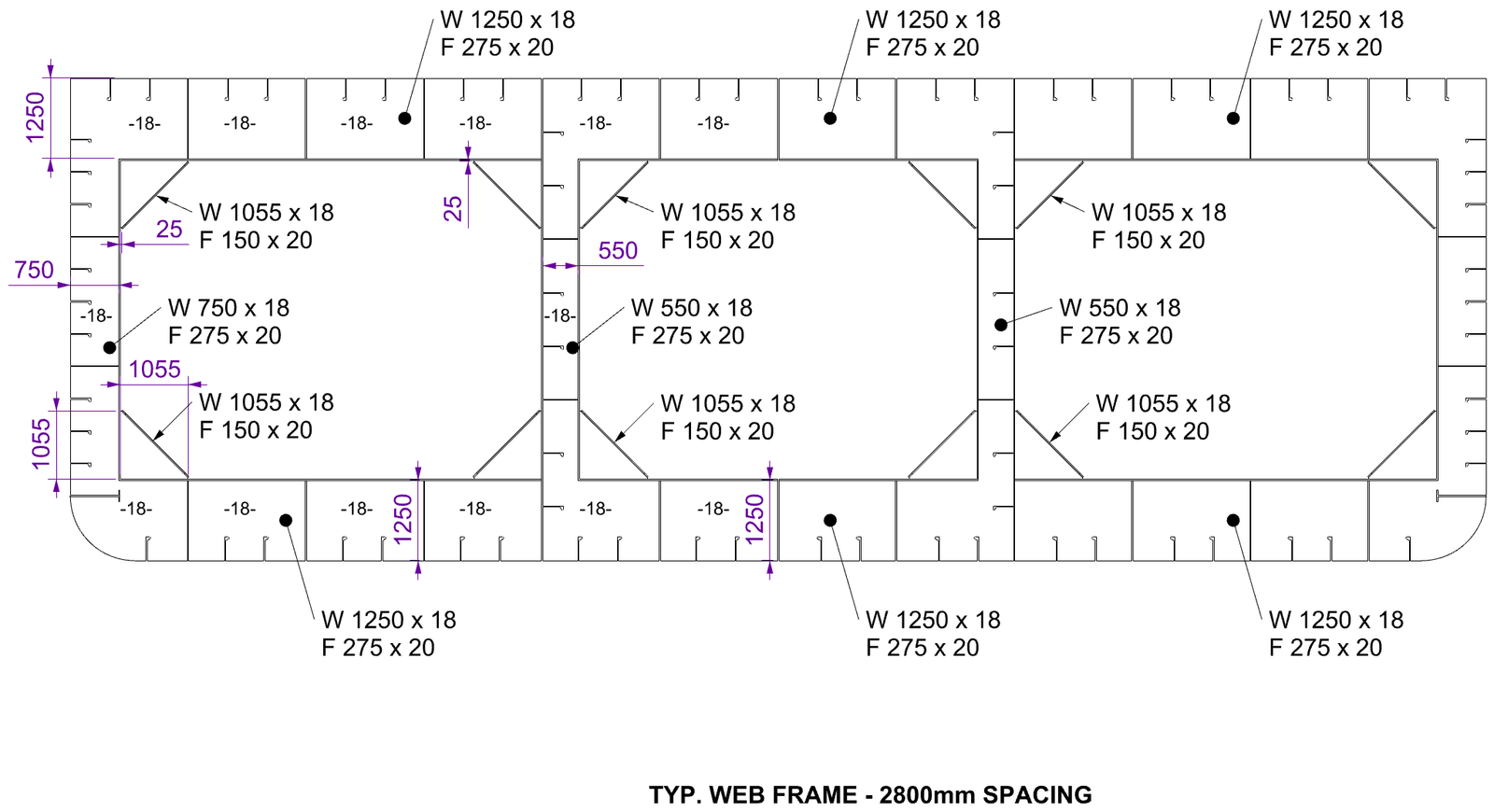
Global finite element analysis assessed hull strength under the loading and support conditions considered. Local non-linear analysis examined the behaviour of the bottom structure, informing the strengthening required for grounding. The midship section incorporated the global and local strength requirements, and the resulting structural weight was reflected in the lightship estimates used to evaluate the concept.

Coarse-mesh global shell models were used to assess the primary structure, with finer meshes used for local assessment where greater detail was required.


Design Development and Commercial Feasibility
Weight control was central to evaluating the concept. The hull needed sufficient strength to withstand the assessed grounding conditions, while retaining the carrying capacity required for AIL transport. The midship section was developed to provide the necessary section modulus for longitudinal strength, with additional local strengthening informed by the bottom-structure analysis.
These structural requirements were fed back into the lightship weight estimate and the assessment of displacement, draught, cargo capacity and stability. This formed an iterative design process in which changes to the structure were evaluated for their effect on the vessel as a whole. Strengthening could therefore be assessed alongside its consequences for payload and the intended grounding and discharge operation.
Scantling calculations to classification society rules supported the structural development and provided a basis for progressing the design towards class approval. Weight estimates and stability assessments were developed alongside the structural arrangement to keep the different aspects of the concept consistent.
As part of the concept development, OPC created a detailed specification used for pricing. This brought the engineering and commercial assessments together, allowing the proposed vessel to be considered against both its operational requirements and its anticipated delivery cost. The resulting assessment provided a basis for deciding whether to progress the concept into detailed design and construction.